Saturday, February 4, 2012

Doof Artist Profile: D. Maylock, Doof writer


In the 1930’s and 40’s, D. Maylock (1914-1977) wrote hundreds of Doof inspired short stories for numerous dime novels published in those days . Maylock’s hard-boiled tales involved the Doof as a good luck charm that always ended in revenge and murder. He believed the cartoon image of the Doof was not based on an animal but of a spirit or entity. The Doof’s appearance, without legs, torso or arms floats above the earth supports this theory. Therefore it was easy for Maylock to infuse magic and mystery into the Doof. He imagined the Doof in his stories as an object possessing the power to grant wishes but there was a catch. Like the tale of the monkey’s paw, Doof wishes came with unexpected consequences. Doof Spiritualism had a profound influence on Maylock.
Later in life, Maylock was instrumental in helping a young Doctor Hyram Standoff, Phd. do valuable and groundbreaking research into Doof spiritualism. Dr. Standoff’s eventual book, Season of the Doof, had cause a small stir among the coffeehouse crowd with it’s paranormal theory that the Doof cartoon was much more than a rubbery cartoon. Maylock enlisted a few writing colleagues to try their hand at the genre but it was Maylock that wrote the bulk of the stories, writing under a few different pen names and for a brief period was able to flood the market with his Doof stories, in a hope that publishers would push the new genre since there was a lot of it. Maylock tried very hard to establish the Doof as a mainstream genre in pulp fiction but the market for metaphysical murder mystery dealing with enchanted art objects was limited. Eventually, fiction in the magazine industry collapsed with the advent of television. People now turned their attention to the television for their entertainment. A lot of free-lance writers became television writers. Maylock never made the transition to the little screen. Maylock eventually burnt out of ideas and found himself in the middle of a nervous breakdown. Maylock stayed away from writing and eventually found his self esteem again. He turned to writing romance novels. He translated many of the story ideas of his pulp days into his love stories and they soon became the staple among women’s book clubs across the country. This lucrative genre kept him busy for the rest of his days and he finally became a wealthy man.

Early Years

Maylock was born in the mid-west, moved to Chicago. His parents were immigrants who work in the slaughter yards. Although they spoke little english, they taught their son how to read and write and sent him to school. Maylock work in the yards on saturdays to help out his parents and would entertain the fellow workers with his suspense stories. Maylock wrote stories for the school’s newspaper and submitted stories for the english class annual. He was writing for the local paper before he finished high school. He reported news, wrote editorials and designed ads. This is where he honed in on his skills of creating stories effortlessly for a deadline. He did not have to work at the slaughter house anymore. He was making money at writing.
Maylock was inspired at an early age by a visit to the Authentic Old Drug Store and Doof Museum in Florida. There as a child he met the druggist, Dr. Wayne Fullerster who showed the lad his collection of Doofs, many old and mysterious. This visit had a huge impact on Maylock as he built his own history for the Doof. Maylock kept been corresponding with Fullerster once or twice a year trading photos, recipes, stories. Maylock visited Fullerster’s Museum on several occasions.

Pulp Writer


Maylock went into the army after high school. He stayed in the army for two years and wrote for the local army newspaper. There he meet a couple of GI’s who were in publishing before they were drafted. They liked the style of the way Maylock described things in his articles and offered him a chance to write short stories for them when his enlistment was up.

Maylock was a quiet drunkard who often was blinding drunk when he typed out story after story.Maylock was a throw back to the work ethic of filling the time with work. There wasn’t any social life. He was working for survival. It was hustle after hustle making a living. He was able to work hours on end without rest. Nobody wanted to stop him because the writing was so brilliant and concise. He would stay sober for only brief periods of time.
He developed writer’s block and this drove him to depression as the once prolific artist was empty of stories. This depression drove Maylock to having a nervous breakdown and he landed in a sanitarium to recuperate.

Later Years


Maylock married Carla Joe Zimmotto in 1967. He met her at a bar in the sanitarium and fell in love with her when she told him that she had read all that he had written. He found that he enjoyed writing again. They were together for the rest of his stay and eventually got married. After many years alone, Maylock was happy to have someone in his life. His new bride thought it would be a fresh start for her and Maylock if they cut ties with everyone he knew and move to a place in the country where Maylock could try to get back at writing. She encouraged him to write Romance novels and he easily adapted to the writing style. It wasn’t long before Maylock was busy writing novel after novel. On a summer’s night in 1977, Maylock and Carla died in an automobile accident on their 10th wedding anniversary.

Monday, January 30, 2012

Doof Artist Profile: Abigail Lombard: Doof Exotic Dancer


The Doof image has inspired many Doof artists and Doof writers. Today, we focus on a Doof dancer. An exotic Doof dancer to be specific. Abigail Lombard. Enjoy!

Abigail Lombard was born Helen Fournier in 1922 to parents who owned a small but prosperous bakery in Paris, France. At an early age, Helen possessed a creative mind and was drawn to the world of the Parisian advante garde and especially idolized the flamboyant Kiki. Little Helen was also drawn to the world of American movies and instantly became enamored with the Doof image after seeing Doof cartoons. She developed a fantasy about the Doof. She fantasized the Doof entering her person to live there and be her guide and inspire her. Helen, at the age of 12, gave herself temporary henna Doof tattoos. She placed them all over her body, changing the location of the tattoo weekly. This practice she would continue for the rest of her life. She
claimed the tattoo was a mark the Doof left as he swims around her being. Abigail also loved to dance and her parents encouraged her to take up ballet. Her parents were thrilled having a ballerina in the family until they learned that their daughter wanted to study exotic dancing instead of ballet. This decision strain their relationship with their daughter but Helen felt her art would be best expressed with pasties and not slippers. She moved out of the bakery, change her name to Abigail Lombard and moved into the world of the Paris cabaret scene. Because of her uniqueness she was immediately hired as a dancer. She used
the Doof image in clever costumes and she became well known for her unique Doof inspired strip teases. Eventually she came to the New York, wanting to be a exotic dancer on Broadway. After a few years she migrated to the west coast and settled in San Francisco, where she finally got to dance on Broadway. In the fifties she became engrossed in the Beat generation where she was exotic dancer and had brief affairs with writers, painters and book sellers. In the sixties she became a hippie and an exotic dancer and had brief affairs with writers, painters and rock musicians.In the
seventies, Abigail became a feminist and an exotic dancer and had brief affairs with writers, painters and politicians. In the Eighties, Abigail became a hair stylist, retired from exotic dancing and got married to a ex-biker with a dog named Duke. She cut hair and told stories about
her life until her death in 2003.


Monday, January 23, 2012

The History of Doof Merchandise: Part One


The image of the Doof was once considered a valuable commodity and was used to promote various types of products for consumers to consume. By all indications using the Doof as an endorsement to sell merchandise was not a sound idea.


Doof Wonderments


In the aftermath of the fiery demise of Music-toons Productions, a somewhat phoenix rose out of it ashes. One of the now unemployed sales force, a man by the name of Arturo Sukini created a small fortune from the salvaged image of the Doof.
Sukini, who everybody called Sal, was a smart and resourceful man. Losing his job at the studio was not a great setback. He was a salesman and knew that all he needed was a product to sell. He remembered befriending in a bar an out of work chemist, Earl Headly. He looked up Headly, offered him a business opportunity and together they developed a line of medical salves and ointments. In 1939, Doof Wonderments was in business. As the story goes, it was the salesman's use of the Doof image to represent the brand that fueled sales. He saw how Mickey Mouse’s image was very successful and he banked on the Doof to appeal to the public as well. Doof Wonderments products made a modest profit for the two men at first but things quickly ended with tragedy. It was discovered that many of the
chemicals that Headly used, when mixed with each caused strange abnormalities to the people who were using them. People were literally losing the use of arms and legs and the dead
appendages were wilting off their bodies. Soon people began protesting and demanding refunds from the company. Getting no response from the company, an angry mob stormed the Wonderments factory and set fire to it. The two owners made their way out a back door and into a waiting car that was never seen above the equator again. Afterwards, the victims, their families and the people who supported them formed a grass root political group, Doof Culture and tried to get their voice heard in Washington about regulations on cure-alls, but with the declaration of war by Japan on the United States, the group disbanded as many of its members enlisted in the armed forces.


Miracle Toy Company


Doof Wonderments spawned Miracle Toy Company, which manufactured Doof toys for children. Although it boasted that the toys were made in the United States, the toys were made in Usa, a tiny province of China. The toys hit the market and it wasn’t long before 12
children were diagnosed with radiation poisoning in 1940. It was believed that the materials used in the manufacturing of the toys were rare and radioactive. The children developed strange mental abilities and after a week of terrorizing the little southern town that they lived in, were herded off by the government to a top secret installation in Nevada. The toys were quickly taken off the shelves in the spring of 1941, the company was quickly sued and was forced to closed down due to the power of the Doof Culture political party.

Saturday, January 21, 2012

The Spirituality of the Doof Image

The Doof Museum of Culture and History is honored to post an essay on Doof Spiritualism by the renowned historian and heavy thinker, Dr. Hyram W. Standoff, Phd. Dr. Standoff is one of the leading authorities in a variety of important fields of studies. He has written award winning essays on such topics as Sexuality in the Male Super Hero, Why can't Birds and Bees Mate and the essay that would be considered his benchmark, Yellow is the Color of a Banana, not a Coward. Dr. Standoff has written about Doof culture and published a book, Season of the Doof, which claimed that the happy go lucky Doof, star of many Music-toons cartoons was based on a spirit or enity that people found to be of a mystical nature and had a touch of magic. Dr. Standoff is currently fielding offers for university posts. if you or your friends know of one, please let the good doctor know.

The Spirituality of the Doof Image
by
Dr. Hyram w. Standoff, Phd.

If you were to ask the question, Do you remember where the Doof came from?, to the man on the street, he would readily agree that the origin of the Doof image would be in the animated cartoons produced by Music-toons Studios in the late 1920’s. Mr everyman would also remember the image of the Doof adorning the labels of Doof Wonderments health products.
As fate would have it, products from these companies would be the cause of nine deaths, five disfigurements and a score of people with rash and allergy problems. The families of these victims pulled together and tried to seek justice from the companies that brought misery to their love ones. Eventually their group blossomed into a small grass roots organization that tried to bring change to the country but the beginning of US involvement in WWII ended its power. Using the Doof image as the groups insignia gave it’s image a power that elevated it from being a humorous cartoon pitchman to being a symbol of hope for the struggle of the common man. It became spiritual.


Strange picture from the 1860’s was found in Wisconsin of an union soldier in full uniform and holding his rifle is standing next to a wall that has a Doof drawn on it. The story of the soldier was that when he went off to fight in the war he never got there and disappeared forever. How is it that an image of the Doof be so far back in history.


To make the matter more mysterious, a photo turned up of General Robert E. Lee in a history book and if you look close at the photo, the general is wearing a jewel brooch that has a distinct image of a Doof on it. There must have been a magical notion about the image and maybe it was for good luck or protection.
As for all the unexplained sightings and beliefs of the Doof spirit being able to grant good luck and clearness of vision, there was always people who saw an opportunity in the vulnerability of people and their beliefs.


The strangest case non withstanding, appears to be a petroglyph found the island of Malta, in the mysterious ruins of Hagar Quim. The ruins are said to be 2000 years older that the pyramids of Egypt.In a small corner of the existing encampment, next of what could be a doorway, a small doof like image was discovered carved into the limestone. tests suggest that
the carving was made by the same tools as the other decorations found on the site. Archaeologists who have been working on the site are working on a theory that the whole settlement was a matriarchy and the symbol that resembles the Doof had something to do with fertility.

Doof cults, whose beliefs vaguely resemble the ones they base their creed system on, still exist today and cases and documentation of Doof phenomenon are still being recording by the authorities, reluctantly. Doof phenomenon has it small space in society’s need for the unexplained just like the legend of Big Foot or the belief in U.F.O.s. It is a god given right.

Two Strange Cases of Doof Phenomenon


This photo shows a cloud formation that resembles a Doof. It was taken in 1995, after a major snow storm that dumped more than 7 feet of snow. This photo was taken on the day it finally cleared.


This old photo, Taken in a church down in Mexico, shows a strange light reflection that shows the Doof image. Could it really mean that the image of the Doof is more that just a cartoon Character?

Doof Gallery

a changing survey of the growing Doof Culture collection.

Doof Bling

Doof Bling

T. L. Douveres

T. L. Douveres
my portrait of the famous Doof visionary

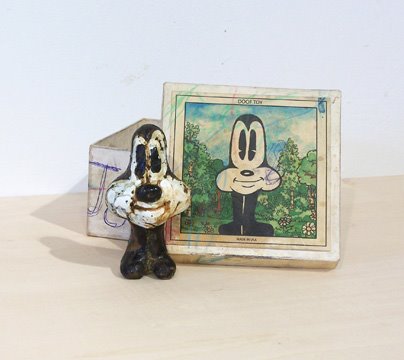
Doof Toy

Doof Toy

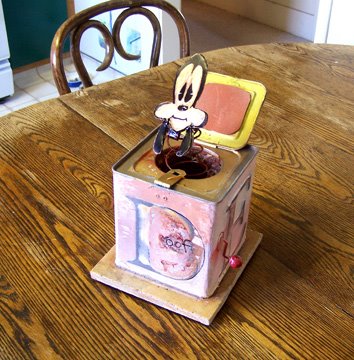
Doof in a Box

Doof in a Box

Jack O'latern Doof

Jack O'latern Doof

Doof in a Marsh

Doof in a Marsh
9 x 12"

Graphite Doof

Graphite Doof
graphite on museum board, 35 x 27"

Beach Doof

Beach Doof
rocks,water and sand